
More Than Steps : An Invitation to Dance
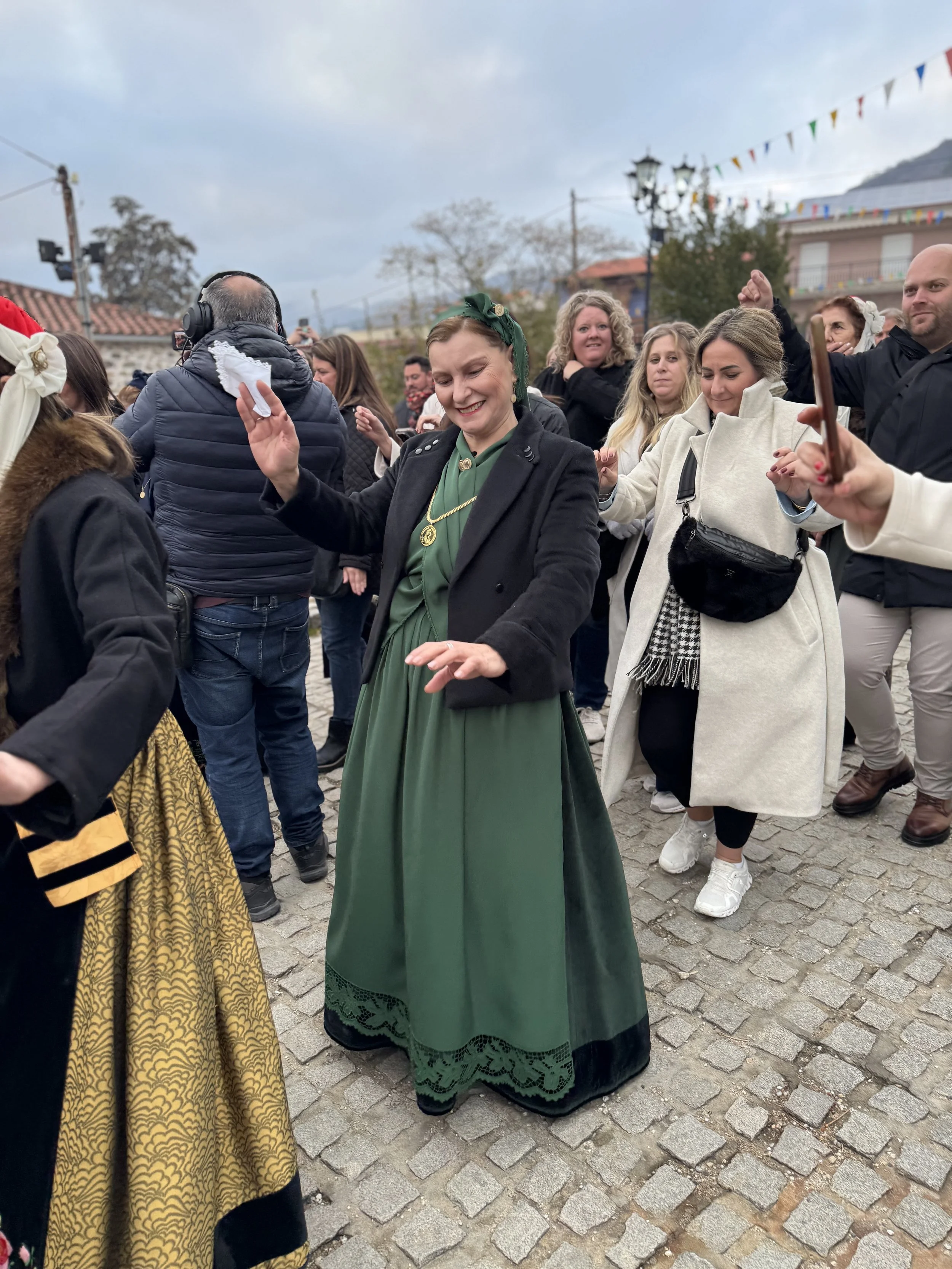
I’ve spent years woven into the embrace of fellow Greek dancers - sometimes leading, often following, always listening - present in body, mind, and spirit, while letting my own style flow in harmony with the steps, rhythm, and lyrics. What lingers most is not any single step or figoúra (φιγούρα), but the way Hellenic dance breathes life both within and beyond the circle itself.
Consider this blog your invitation.
Through these posts, I’ll be guiding you as we explore Hellenic folk dance - both lived experience and cultural knowledge - in conversation with the work of the Hellenic Preservation Arts Foundation (HPAF). Together we will move through stories, research, memory, and motion, as active participants in a living tradition - enriching, educating, promoting, and preserving.
To Enrich: Stepping Into the Circle
Hands meet - tentative, then confident. Laughter spills as bodies circle one another, spinning, squatting, leaning into movement and trust. Friendships blossom here, nourished by dance, each step a conversation, a gentle negotiation of space, time, and memory. Around and around, we move together, guided by music older than any of us, discovering the language of rhythm and harmony through improvisation - through shared Hellenic love.
Greek dance enriches more than muscle memory; it cultivates connection, weaving together generations, geographies, and communities. From a platía (πλατεία) to festival grounds and church halls, the circle holds more than steps - it holds relationships, trust, and shared history. What begins as movement quickly becomes a bond, grounding individuals in something larger than the self.
To dance among the generations in a circle is to step into a tradition older than any one dancer. When hands link, rhythm settles, and motion flows, it is not a performance; it is participation, a living thread connecting past and present, teacher and student, neighbor and stranger.
To Educate: Dance is Knowledge
I step into a dance with my student, her hand in mine is small but determined . The music erupts, and for a heartbeat, we are both following and leading, learning and teaching all at once. Feet echo the instruments, arms sway in unison, and time stops - movement becomes memory, memory becomes belonging.
Long before written notation or formal instruction, dance served as a method of cultural transmission. Steps were learned through observation, repetition, and communal participation - what scholars often describe as embodied knowledge.
Each movement teaches. It carries information shaped by region, community, and purpose. Island and mainland. Generational leaders and new beginners. Weddings, religious gatherings, and annual functions. In this way, the dancer becomes both student and archive. Education here is alive and tactile. The dance floor becomes a classroom and teacher all at once, passing knowledge seamlessly from one body to another.
To Promote: Continuity and Belonging
On stage, American-based directors meet Greek-based directors in harmonious steps. Feet echo the rhythm, rising and falling in unison, while voices lift in a cappella melodies, carrying stories across oceans and generations. Each smile, each step, each note resonates with connection - proof that movement and song can bridge distance, language, and time.
As Greek communities migrated, their dances traveled with them. Removed from their original village and introduced to new cultural landscapes, these traditions adapted - yet continued to signal identity and belonging. Folk dance has long promoted cultural visibility and continuity, particularly within diaspora communities. Each rehearsal, performance, and informal gathering affirms that these traditions remain relevant, practiced, and proudly carried forward.
To Preserve: Syncopation as Living Archive
I step softly beside my yiayia, her wrinkled hand enclosing mine. She moves with a grace passed down through generations, guiding the line with quiet authority, her tearful voice carrying melodies older than my memory. I follow, I mirror, she leads - each step a conversation of trust, love, and shared history.
Knowledge flows from body to heart, carried in motion, memory, and song. This is preservation in practice: alive, breathing, and beautiful, sustained not in records, but in the living rhythm of our dance. This is preservation in practice. Greek folk dance is not frozen in time, but sustained through use. Each time the music begins, cultural memory awakens, relationships deepen, and tradition continues to live - not as artifact, but as experience, as connection, as ongoing dialogue between generations.
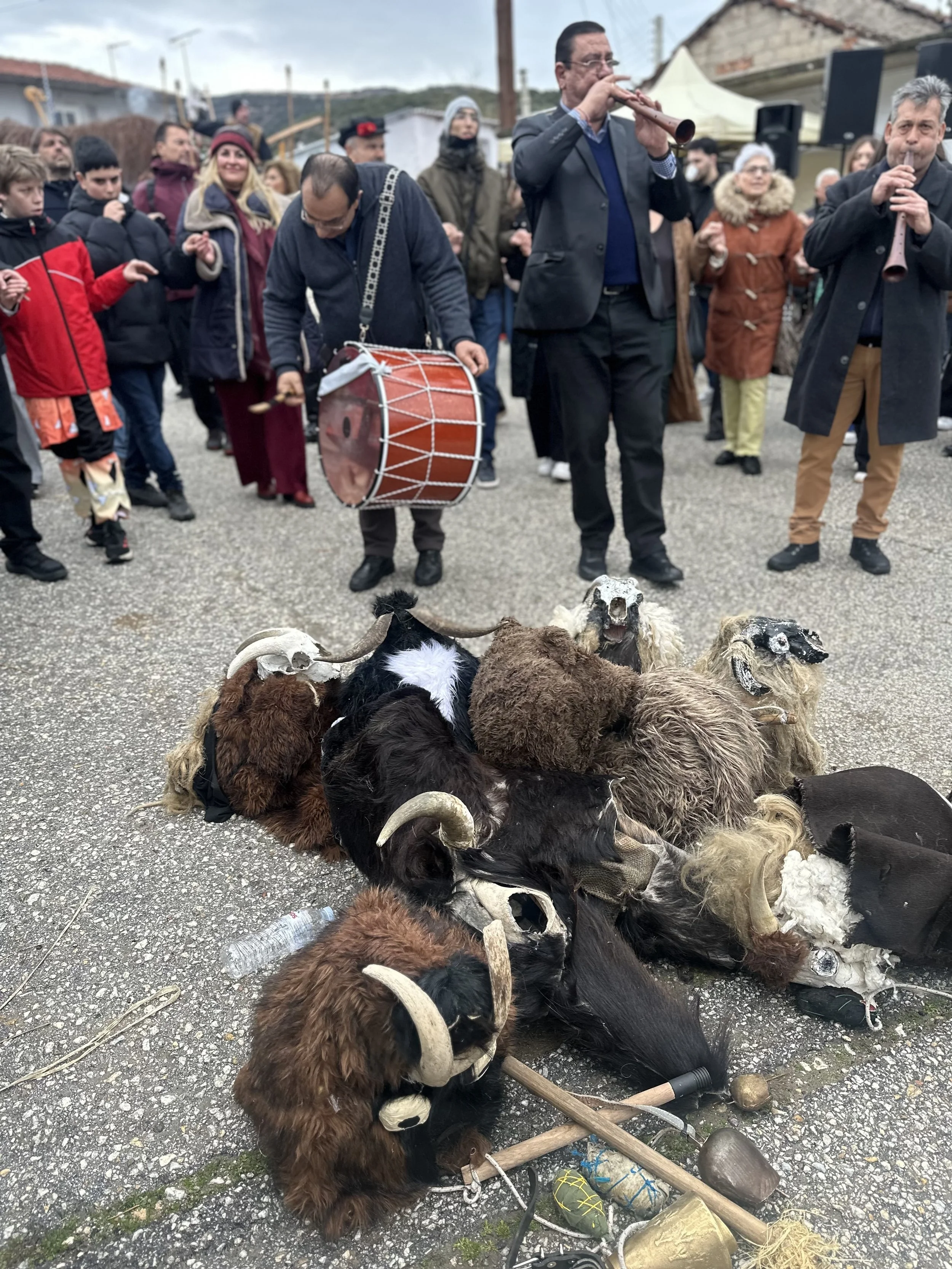
An Ongoing Conversation
My hope is that these posts serve as a space to think, feel, and move together - alongside HPAF members, directors, scholars, dancers, and willing participants who share a commitment to enriching, educating, promoting, and preserving Hellenic culture.
You don’t need to be a dancer to enter this conversation. You simply need curiosity, openness, and a willingness to step into the circle and embrace a hand, one that holds many stories.
The circle is open for a reason. The music has already begun…will you discover the rhythm for yourself?
Stay Tuned…
Later this month, we’re taking a closer look at what makes Ethos’ virtual conference such a valuable experience for growing persons and groups alike. From expert insights to real-world strategies, we’ll break down the benefits of attending and how this event can help you think bigger about your Hellenic future.
Stay tuned next month as we dive into what it truly takes to build a successful multi-city group - the system, the leadership, and the mindset behind sustainable growth. There’s a lot to be excited about, and we can’t wait to share what’s ahead!
About Our Logo: A Modern Chrysokentima
A Modern Chrysokentima

The Hellenic Performing Arts Foundation logo is more than a design- it is a living thread that binds past to present, and tradition to performance.
Inspired by the intricate art of χρυσοκέντημα (chrysokentima), or gold embroidery, the Hellenic Performing Arts Foundation’s emblem reflects the centuries-old artistry at the heart of Greek culture. It pays homage to the masterful τερζήδες (terzides)—the traditional tailors of Greece and the Balkans- who adorned garments, vestments, and ceremonial attire with gold thread of extraordinary delicacy and precision.
In this tradition, a single continuous line, known as a μονοκοντυλιά, guided the gold thread’s path. It was laid carefully across fabric, secured invisibly, and never cut until the design was complete. This technique is more than craftsmanship; it is a symbol of continuity, discipline, and devotion to beauty, values that echo through the Hellenic performing arts.
A Symbol Woven with Meaning
Just as the terzides followed hand-drawn patterns with shimmering gold, so too do musicians, dancers, and singers follow the forms set by generations before them- bringing them to life through sound, movement, and expression. Our logo is a visual metaphor for this artistic journey, where tradition guides performance, and the past lives on in the present.
Rooted in Tradition, Shaping the Future
The Hellenic Performing Arts Foundation is dedicated to preserving, celebrating, and advancing the living legacy of Hellenic performance. In that spirit, our chrysokentima-inspired logo is not only a tribute to heritage- it is an invitation to weave the next layer of the story.
Just as the terzides approached their threadwork with patience, reverence, and purpose, so too do we honor the cultural treasures of Greece. Every performance, every workshop, every archival initiative is part of an unbroken thread—one that continues to illuminate our path.
Special thanks to Krista West and Kristen Stuart for designing our logo and Ariadne Kritonos for your expertise